
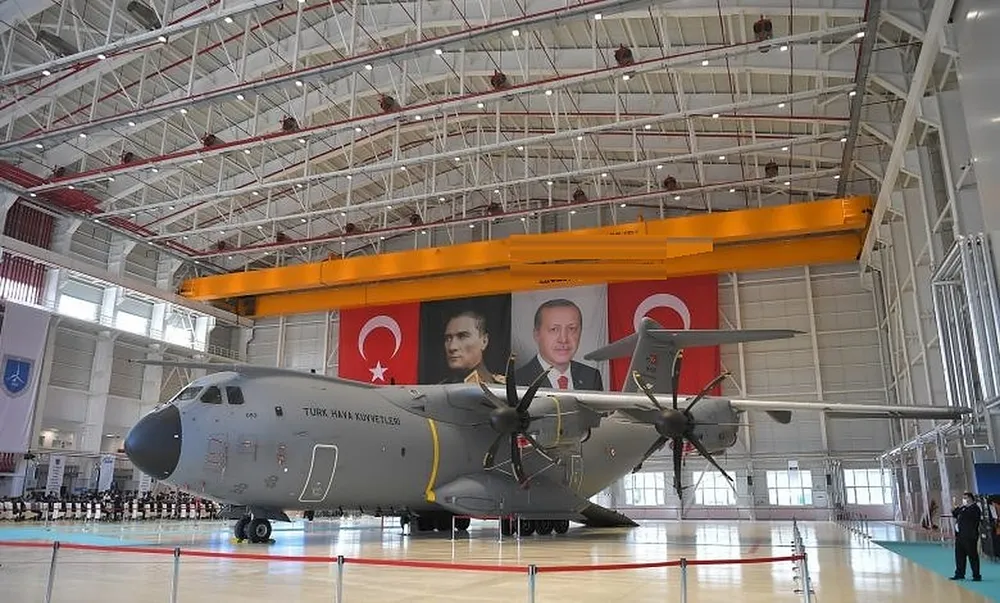
From a fire-engineering standpoint, an aircraft hangar is one of the most demanding examples of the “large volume + large quantity of flammable fuel” equation. On the MoD Eskişehir Fasbat Aircraft Hangar project, A-Pro Engineering met this risk with a high-expansion foam suppression system: a complete system that fills the vast hangar volume with foam within seconds of a fire.
Why Foam? The Nature of a Jet-Fuel Fire
The primary risk protected in a hangar is the jet fuel carried by the aircraft that can pool on the floor (Class B, flammable-liquid fire). In this type of fire, water alone is useless — even harmful:
- Being denser than fuel, water sinks beneath it and can spread the burning fuel, worsening the fire.
- Foam blankets the fuel surface like a thin cover; it cuts off oxygen, suppresses vapour and prevents re-ignition.
The international reference standard for aircraft-hangar fire protection is NFPA 409, which is built around foam systems.
High-Expansion Foam: The Logic of Filling a Volume
Hangars are not just wide but also very tall in volume. This is where high-expansion foam comes in:
- A small amount of foam concentrate and water expands hundreds of times to produce an enormous foam volume.
- The entire hangar volume fills with foam within seconds; the fire is suppressed not only on the floor but three-dimensionally.
- Aircraft, equipment and personnel gain fast, total protection.
The Heart of the System: Bladder Tank, Generator and Deluge Valve
The system was installed complete from complementary main components:
- Bladder (membrane) foam tanks — dose the foam concentrate into the line at the correct ratio, driven by the pressure water applies to the membrane, with no need for a separate pump.
- High-expansion foam generators — mix the foam solution with air to produce high-expansion foam and discharge it into the hangar.
- Deluge valves — open when detection triggers, bringing all open nozzle groups online at once; they start suppressing a large area instantly.
Turnkey Delivery
A-Pro Engineering carried the project complete, from a single source:
- Engineering design — foam flow rate, expansion ratio and discharge scenario for the hangar volume.
- Procurement — bladder tanks, foam generators, deluge valve sets and ancillary equipment.
- Mechanical works — foam and water pipework, support systems.
- Installation — generator, valve and nozzle installation.
- Testing and commissioning — functional and foam-discharge scenario tests.
Outcome
The MoD Eskişehir Fasbat Aircraft Hangar was secured with the right solution for large-volume, high-fuel-risk structures — a high-expansion foam suppression system. The project reflects A-Pro Engineering’s experience installing complete foam suppression systems in special-risk military and industrial structures.
Frequently asked questions
Why is foam suppression used in an aircraft hangar?+
Hangars hold large quantities of jet fuel; such flammable-liquid fires (Class B) cannot be extinguished with water — water can spread over the fuel and worsen the fire. Foam blankets the fuel surface, cutting off contact with oxygen and suppressing vapour. The reference standard for aircraft hangars is NFPA 409.
What is high-expansion foam and why is it preferred in a hangar?+
High-expansion foam produces a very large foam volume from a small amount of foam concentrate and water (an expansion ratio of hundreds of times). This lets an enormous hangar volume be filled with foam within seconds, rapidly suppressing both the fuel fire on the floor and any three-dimensional spread.
What do the bladder tank and deluge valve do?+
A bladder (membrane) tank doses the foam concentrate into the line at the correct ratio using pressurised water, with no need for a separate pump. A deluge valve, when it opens, sends water/foam to all open nozzles at once; triggered by detection, it brings a large area online instantly for fast, total suppression.
Was the system installed turnkey?+
Yes. A-Pro Engineering installed the high-expansion foam suppression system complete — including bladder foam tanks, foam generators, deluge valves and ancillary equipment.
Related systems
Let’s discuss the right solution for your facility
Contact our engineers for a free site survey and quote within Ankara.